
Stewards of Nature and Stellenbosch University showcase biodiversity benefits of invasive tree clearing
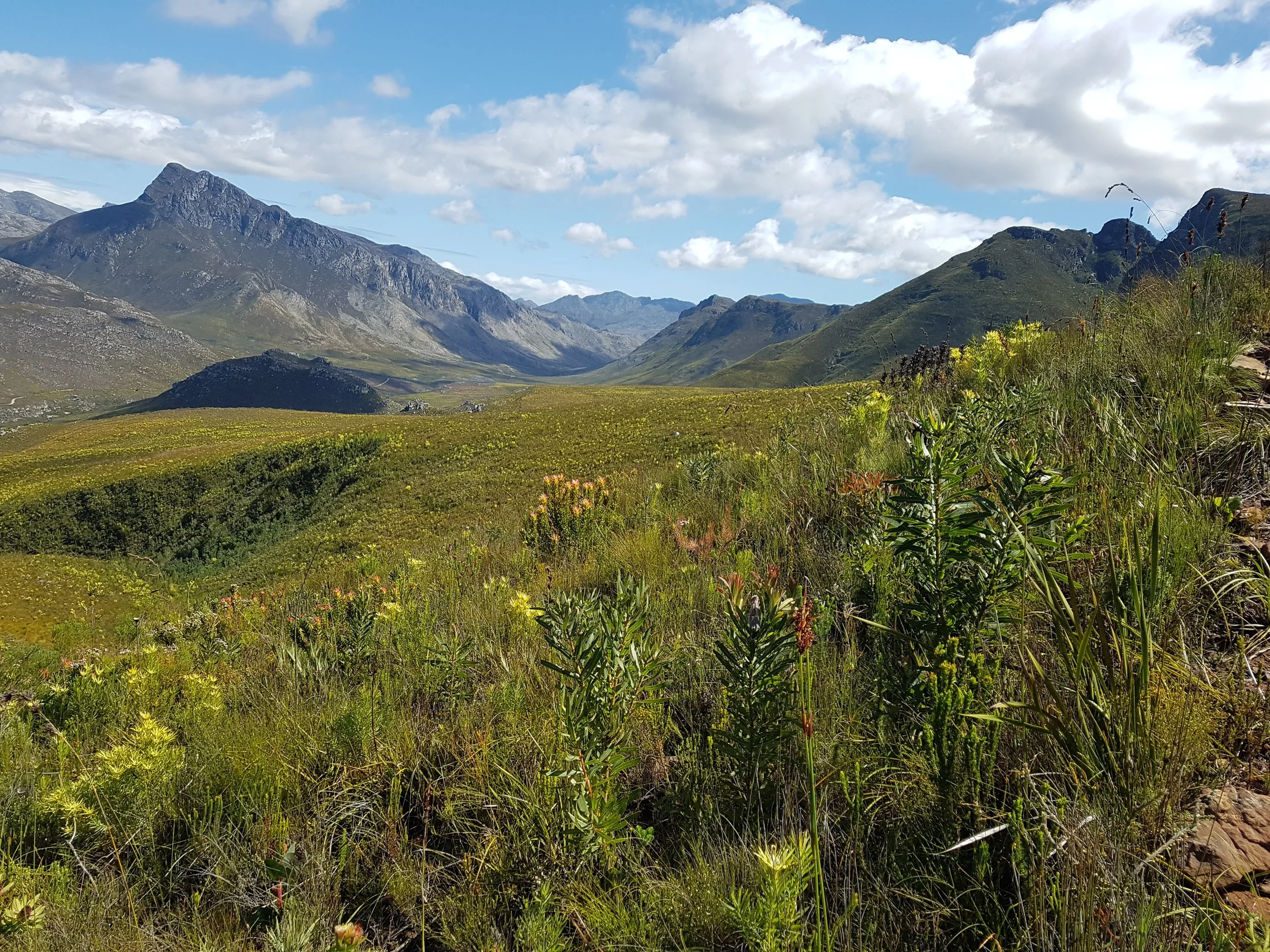
First-year results show measurable gains in ecosystem restoration from harvesting invasive alien trees.
Stellenbosch, South Africa — Stellenbosch University (SU)’s School for Climate Studies (SCS) and Stewards of Nature (SoN) have announced the first results of their research partnership. Field measurements conducted on selected and representative SoN sites and analyses by SU prove that the removal of invasive alien plant species (IAPs) to supply value chains has already led to measurable improvements in biodiversity, showing the first signs of ecosystem recovery just one year after harvesting. The findings confirm that, when carried out responsibly by the private sector, the removal of invasive species supports ecological restoration, reduce fire hazards, and unlock degraded land for productive use.
The research, conducted under the EU Horizon-funded MarginUp! project, monitored vegetation recovery across Stewards of Nature sites in South Africa’s Eastern Cape after the first two years of intervention.
Academics from the School for Climate Studies (SCS) compared cleared versus uncleared areas to evaluate how the removal of invasive trees such as Eucalyptus, Pine, and Acacia that are dominant IAPs in South Africa affect the recruitment of native species.
The results revealed that in general, harvested sites exhibited higher native vegetation cover and, to some extent species richness. The extent of species recovery was context-dependent on factors such ecosystem type, land–use type and dominating IP. For example, thicket areas that were previously dominated by Eucalyptus and Pine exhibited better recovery of native species cover and richness. These outcomes suggest that harvesting IPs can encourage natural recovery processes, to enhance ecosystem function and resilience.
Importantly, the research also highlights the need for careful management to sustain these biodiversity gains. In Acacia-invaded pastoral lands, non-native regrowth and secondary invasions were more likely to occur, mainly through coppicing stumps or agricultural weeds. Active restoration management could help to build the resilience of these areas and mitigate the risk of reinvasion.
The findings remain focused on short term impacts and the assessment of longer term biodiversity benefits remains to be done. Researchers suggest that consistent follow-up clearing and monitoring are essential to ensure that ecological benefits persist over time. By complying with clearing protocols and following adaptive management practices, land managers can prevent reinvasion while promoting the regeneration of native vegetation.
“This research is a critical contribution in the on-going debates in South Africa about the relevance of involving the private sector and developing value chains to reduce the intensity of invasions. In a context of very limited public resources available for restoration projects, this is fundamental”
Building on these promising early results, Stewards of Nature and the School for Climate Studies, Stellenbosch University, will continue to refine and apply this biodiversity monitoring framework to track long-term ecological outcomes and that enables consistent, data-based evaluation of restoration progress across sites. The goal is to establish robust, science-based metrics that can inform restoration policy and support sustainable land management models across Southern Africa.
“This is what Stewards of Nature was built to do. By turning invasive biomass into a regenerative resource, we can link ecological recovery with economic opportunity—and prove that restoration can be both scientifically credible and commercially viable.”
“This collaboration marks a major step forward in demonstrating that harvesting of Invasive Alien Plants can align with restoration objectives. The data shows that when properly managed, invasive tree removal is a scientifically proven pathway to restore biodiversity and ecological balance.”
About Stellenbosch University (SU) and School for Climate Studies
Stellenbosch University is a leading African university with deep local roots and a global reach. For over a century, SU has served as a catalyst for knowledge, innovation, and transformation, advancing research that addresses Africa’s environmental, social, and economic challenges. As a research-intensive centre , School for Climate Studies in Stellenbosch University attracts outstanding researchers and academics to a world-class academic environment committed to enriching and transforming local and global communities.
About MarginUp!
MarginUp! is developing sustainable and circular value chains to produce bioproducts and biofuels from natural raw materials grown on marginal lands. By introducing climate resilient and biodiversity-friendly non-food crops on marginal and low-productivity lands, MarginUp! will increase farming system resilience, enhance biodiversity, and promote stakeholder participation.
Project Contact:
Project Coordinator
Dr Philipp Grundmann
ATB
Communication Coordinator
Patrick Rembe
Greenovate! Europe
Funded by the European Union. Views and opinions expressed are however those of the author(s) only and do not necessarily reflect those of the European Union or REA. Neither the European Union nor REA can be held responsible for them.